
What to Do When Your Child Resists Going to School
Many children have days when they resist going to school. However, when it becomes a pattern, it can cause real problems. School avoidance affects 2 to 5% of children each year, typically between the ages of 5–6 and 10–11. This is when most children are transitioning into kindergarten and middle school, which makes sense.
School avoidance manifests as frequent resistance around going to school, causing delays, tardiness, and/or chronic absenteeism. It's easy to assume your child's resistance is the result of undesired behavior or stubbornness, but school refusal is typically based in anxiety and fear. Here are some signs that your child is experiencing school avoidance, versus developmentally typical resistance to attending school.
- Your child reports unexplained physical symptoms like headaches or stomachaches before or after school
- Your child cries, has tantrums, or tries to hide before school
- Your child begs and pleads with you not to go to school
- Your child demonstrates high levels of anxiety about going to school
- Your child struggles with separating from you and getting out of the car at school
- Your child frequently requests to be picked up from school
- Your child has a habit of leaving school early, spending excessive time visiting the nurse, or attempting to communicate frequently throughout the day
If left unaddressed, school avoidance can escalate to chronic absenteeism, and eventually, truancy. While a few days of school missed are not concerning, school avoidance is – here's what you can do about it.
What to Do When Your Child Avoids Going to School
There are three steps you need to take when your child is hesitant to go to school. We'll walk you through each one, but here's the overview:
- Listen to your child and take them seriously
- Try supportive tactics to reduce refusals
- Seek support if refusal continues
Let's start at the beginning!
1. Listen to your child and take them seriously
- Physical Symptoms
If your child is complaining about stomachaches and pains, take them seriously – even if you think it might be related to school avoidance. Take them to their pediatrician to evaluate them and address symptoms. Their pediatrician may also have advice on school avoidance and how to support your child through it in a developmentally appropriate way. It can also be helpful to connect with the school nurse and inform them of your child’s symptoms.
- Bullying Concerns
If you’re concerned that your child is anxious about a specific situation at school, like bullying, don’t interrogate them about it—create a space that feels safe for them to share with you. You can try telling brief stories about times you experienced bullying in casual conversation, to normalize talking about it. You can also try asking them open-ended questions like “Who did you sit with at lunch today?” or “What was the hardest part of your day?” to get a sense of what their daily routine is like at school and who they’re spending time with.
- School Struggles
Sometimes, school avoidance occurs because the environment or schedule at school doesn’t work for them. This is often the case for children struggling with mental health issues, such as anxiety, depression, autism, ADHD, or dyslexia. These conditions can make school more stressful and overstimulating, particularly if they are not yet diagnosed. If you suspect your child may be dealing with a mental health condition and needing support, check out our parent’s guide on how to find mental health care for your child.
2. Try supportive tactics to reduce refusals
Here are some things that can make it easier for your child to reduce their anxiety about school, based on what they find the most challenging.
Is arriving to school difficult? |
Are things overwhelming or confusing? |
|---|---|
|
|
Is your child anxious/uncomfortable during the school day? |
Is your child feeling isolated or finding friendships at school difficult? |
|---|---|
|
|
No matter what your child is struggling with, here are some general strategies to support a child experiencing school avoidance.
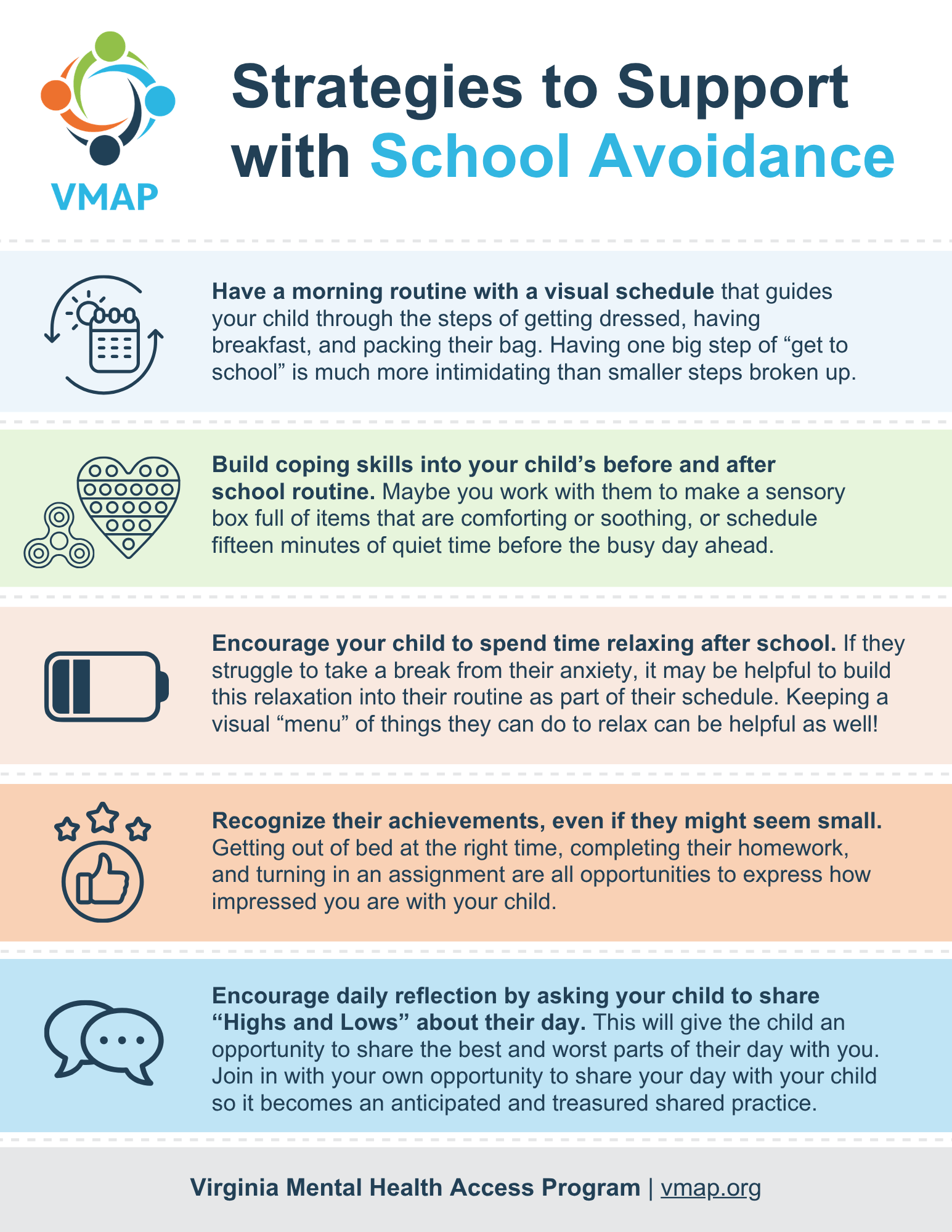
- Have a morning routine with a visual schedule that guides your child through the steps of getting dressed, having breakfast, and packing their bag. Having one big step of "get to school" is much more intimidating than smaller steps broken up.
- Build coping skills into your child's before and after school routine. Maybe you work with them to make a sensory box full of items that are comforting or soothing, or schedule fifteen minutes of quiet time before the busy day ahead.
- Encourage your child to spend time relaxing after school. If they struggle to take a break from their anxiety, it may be helpful to build this relaxation into their routine as part of their schedule. Keeping a visual "menu" of things they can do to relax can be helpful as well!
- Recognize their achievements, even if they might seem small. Getting out of bed at the right time, completing their homework, and turning in an assignment are all opportunities to express how impressed you are with your child.
- Encourage daily reflection by asking your child to share "Highs and Lows" about their day. This will give the child an opportunity to share the best and worst parts of their day with you. Join in with your own opportunity to share your day with your child so it becomes an anticipated and treasured shared practice.
3. Seek support if school avoidance continues
If you’ve tried different strategies and your child is still struggling with school avoidance, it’s time to request external support. Here are three types of support in this situation – your child’s pediatrician, their school, and therapy. Here’s how each of them can help!
- Your Child’s Pediatrician: Your child’s pediatrician is knowledgeable about what’s developmentally appropriate for their age. They can offer advice on managing school avoidance, and they can contact VMAP on your behalf to get advice on your child’s care and/or connect you with VMAP’s care navigation services.
- Your Child’s School: If you think it would be helpful to seek school accommodations for your child’s challenges, you’ll need to request that your child be evaluated to determine their eligibility for a 504 plan or an Individualized Education Plan (IEP). To do this, you’ll need to contact the Director of Special Education for your child’s school district and include your child’s teacher and principal on the communication. You can find your school district’s Director of Special Education here! If you’re not sure what the letter should say, check out this IEP letter template.
- A Child Therapist: Even if your child is eligible for a 504 plan or an IEP, they can still benefit from getting the support of a therapist who specializes in children’s mental health. Your child’s therapist will be able to work closely with you and your child’s school to make sure they are feeling supported. Here’s our guide on how to find a mental health specialist for your child!
We hope this has been helpful, and that you are equipped with the resources you need to support your child with school avoidance!