
Summer & Screens: Encouraging Balanced Screen Time with Kids
Summer break brings the promise of fun and freedom for children across the United States. Unfortunately, this deviation from the normal routine often leads to an excess of screen time, with 68% of children using technology more during summer break at an average of 5 – 9+ hours a day. Here’s where they’re spending their time:
- 66% = educational apps
- 54% = gaming apps
- 46% = video apps
- 37% = communication apps
- 36% = social media apps
- 32% = music apps
The reality is that parents are still working during summer break, and they need activities that keep their children engaged as childcare and camp options can be expensive. 70% of parents agree that their child’s screentime allows them to focus on the work they need to do.
Unfortunately, even though screen time is a convenient distraction technique for children, excessive amounts can lead to negative mental health impacts. According to a 2018 study, more hours of daily screen time are linked to…
- Poor sleep
- Less exercise
- Lower well-being
- Less curiosity
- Lower self-control
- More distractibility
- More difficulty making friends
- Less emotional stability
2 – 17-year-olds who spend at least 7 hours per day on screens are twice as likely to be diagnosed with depression or anxiety, treated by a mental health professional, or need medication for a mental health issue. Most of these impacts were seen in adolescents versus younger children, as they tend to have more screen time. Children and adolescents who didn't use screens or used less than 4 hours didn't differ in well-being.
It's important to note how critical the time spent on screens is. Children who spent a low amount of time on screens didn't have any notable differences from those who didn't use screens at all. The negative impacts of screens began at the 4-hour mark and escalated with every hour spent on screens. A few hours of screen time a day isn't the problem; the problem is when we see the following daily screen time averages from the CDC, knowing they are higher in the summertime.
- 8-10 years old = 6 hours
- 11-14 years old = 9 hours
- 15-18 years old = 7.5 hours
The CDC, AAP, and AACAP don't have official guidelines for screen time, other than that it should be avoided for infants and children. This is because there's lots of factors that are more important than the amount of screen time your child gets (even though less is more) – and here are just a few!
Screen Time Considerations for This Summer
Sound familiar? This is our go-to list for screen time considerations – it was featured on our blog last summer, too!
-
Quantity vs Quality
The quality of media your child engages with is incredibly important. Higher quality media, such as many of the shows on PBS Kids, can improve cognitive, literacy, and social outcomes for children 3 – 5 years of age. Common Sense Media has compiled a list of educational televisions shows for kids with quality ratings, which you can view here! This is a great place to start when you're figuring out what your child wants to watch.
-
Type of Screen Time
There are four types of screen time, and some are more valuable than others!
- Passive: watching videos or shows
- Interactive: playing games on apps or consoles
- Communication: video-chatting, using social media
- Content creation: making digital art or music, coding
Content creation and interactive are some of the most beneficial for your child's development.
-
The "Three C's" of Media
The "Three C's" of media are at the core of creating positive media experiences for children and teens: content, co-viewing, and communication.
- Content: The quality and type of screen time.
- Co-viewing: Watching or engaging with the media alongside your child.
- Communication: Family media plan that sets boundaries around media and helps chidren stay safe online
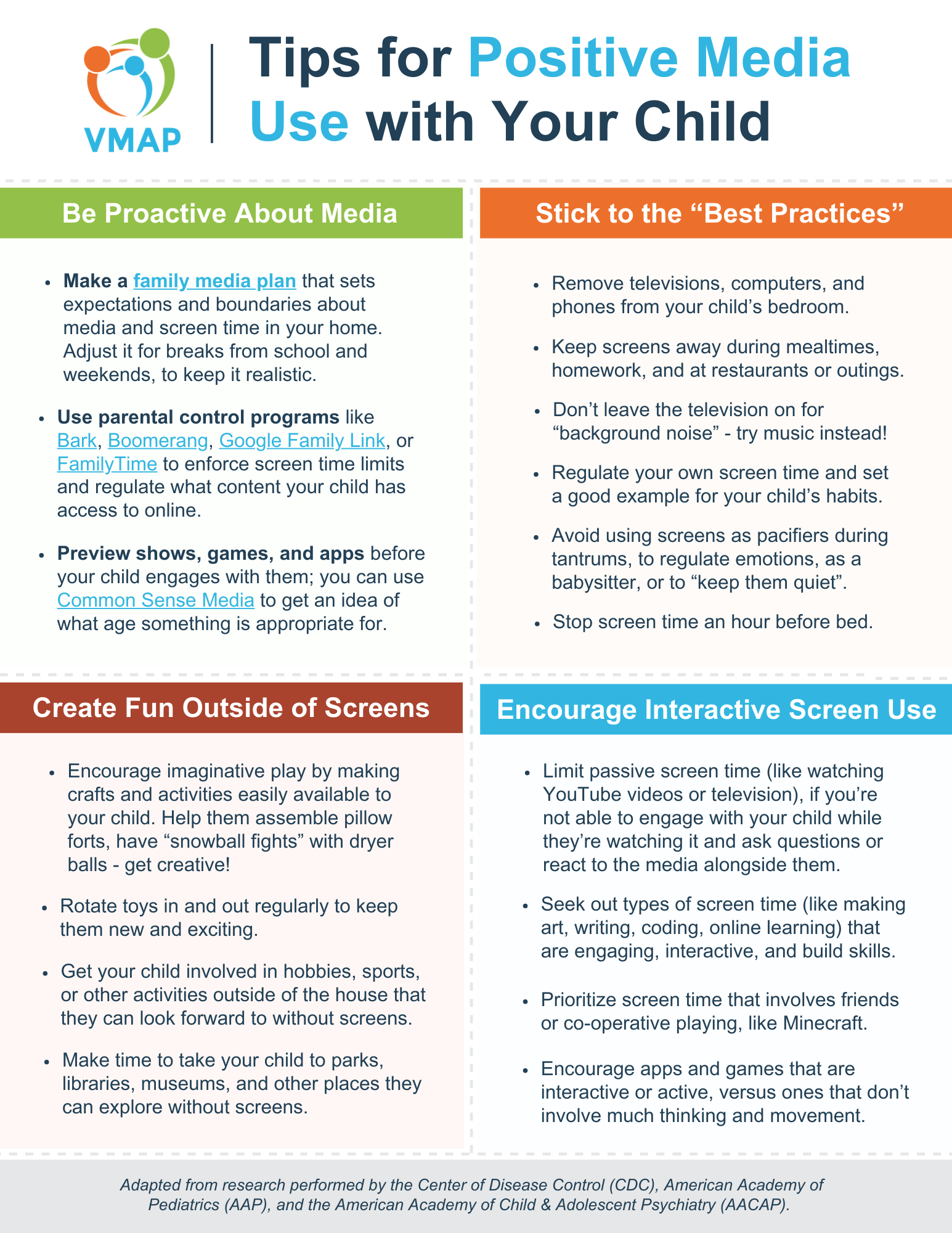
Tips for Regulating & Reducing Your Child’s Screen Time This Summer
-
Be Proactive About Media
- Make a family media plan that sets expectations and boundaries about media and screen time in your home. It will look different in the summers and on weekends, and that's okay!
- Use parental control programs like Bark, Boomerang, Google Family Link, or FamilyTime to enforce screen time limits and regulate what content your child has access to online.
- Preview shows, games, and apps before your child engages with them; you can use Common Sense Media to get an idea of what age something is appropriate for.
-
Stick to the "Best Practices"
- Keep televisions, computers, and phones out of your child's bedroom.
- Put screens away during mealtimes, homework, and at restaurants or outings. Practice what you preach – your screens count, too!
- Don't leave the television on for "background noise" – try music instead.
- Regulate your own screen time and set a good example for your child's habits.
- Avoid using screens as pacifiers during tantrums, regulating emotions, as a babysitter, or to keep them distracted. Try involving your child in what you're doing instead!
- Stop screen time an hour before bed.
-
Create Fun Outside of Screens
- Encourage imaginative play by making crafts and activities easily available to your child.
- Rotate toys in and out every few weeks to keep them new and exciting.
- Get your child involved in hobbies, sports, or other activities outside of the house that they can look forward to without screens.
- Take your child to parks, libraries, museums, and other places they can explore without screens.
-
Encourage Interactive Screen Use
- Limit passive screen time (like watching YouTube videos or television), if you're not able to engage with your child while they're watching it and ask questions or react to the media alongside them.
- Seek out types of screen time (like making art, writing, coding, online learning) that are engaging, interactive, and build skills.
- Prioritize screen time that involves friends or co-operative playing, like Minecraft.
- Encourage apps and games that are interactive or active, versus ones that don't involve much thinking and movement.